• Extra Block One (Left):

    Sectional Tree Dismantling


    Many trees in residential gardens cannot simply be felled in one piece. There may be houses, conservatories, sheds, greenhouses, fences or neighbouring gardens immediately beneath or beside the tree. In these situations, the tree can often be dismantled in sections.


    The tree surgeon works progressively through the crown, removing manageable branches and sections of timber until the main stem can be safely reduced. Where branches cannot simply be allowed to fall, appropriate rigging techniques can be used to control and lower sections of the tree. This makes it possible to remove substantial trees from surprisingly restricted locations.

    Removing Dead Trees


    Dead trees can become increasingly unpredictable as their timber deteriorates. Branches may become brittle, structural strength can decline and decay may affect the trunk or root system. This can also make removing a dead tree more technically challenging than working on a healthy tree. The condition of the tree therefore needs to be assessed before deciding how it can safely be dismantled or felled.


    Where a dead tree is positioned close to buildings, roads, paths or other frequently used areas, delaying necessary work may allow its condition to deteriorate further.

    Removing Dangerous Trees


    A tree does not necessarily need to be dead to become dangerous. Major cracks, root movement, extensive decay or structural failure can make retention increasingly difficult. Following severe weather, trees may also become partially uprooted or suffer major branch and stem failures. Where there is an immediate concern, our emergency tree services in Langford can assess storm-damaged, fallen or dangerously unstable trees. Not every defective tree requires removal. Where practical, pruning, reduction or structural support may offer alternatives. Where the remaining structure cannot reasonably be retained, controlled removal may be the safest long-term solution.


    What Happens After a Tree Is Removed?


    Felling or dismantling removes the visible part of a tree, but the stump and root system remain in the ground. For some locations, leaving the stump may not create a problem.


    Elsewhere, it can become inconvenient, particularly if you want to:


    • Return the area to lawn
    • Create a flower bed
    • Install new landscaping
    • Improve access through the garden
    • Remove a trip hazard
    • Plant in the surrounding area
    • Avoid mowing around an old stump


    In these situations, stump grinding provides an effective way of dealing with the remaining stump.

    Stump Grinding


    Stump Grinding in Langford


    Evolution Tree Works provides professional stump grinding in Langford following tree removal or for older stumps left from trees removed previously.

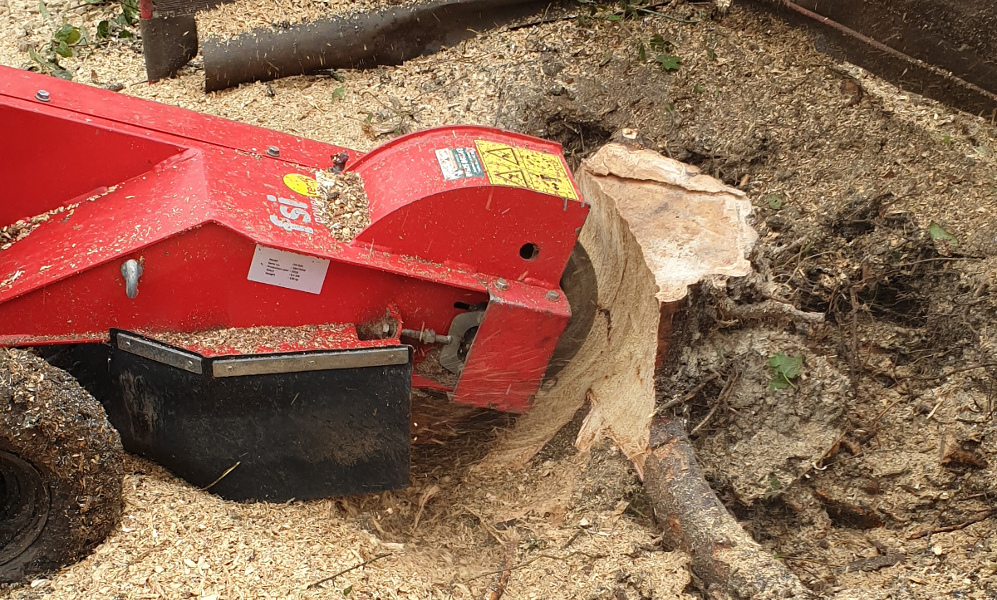
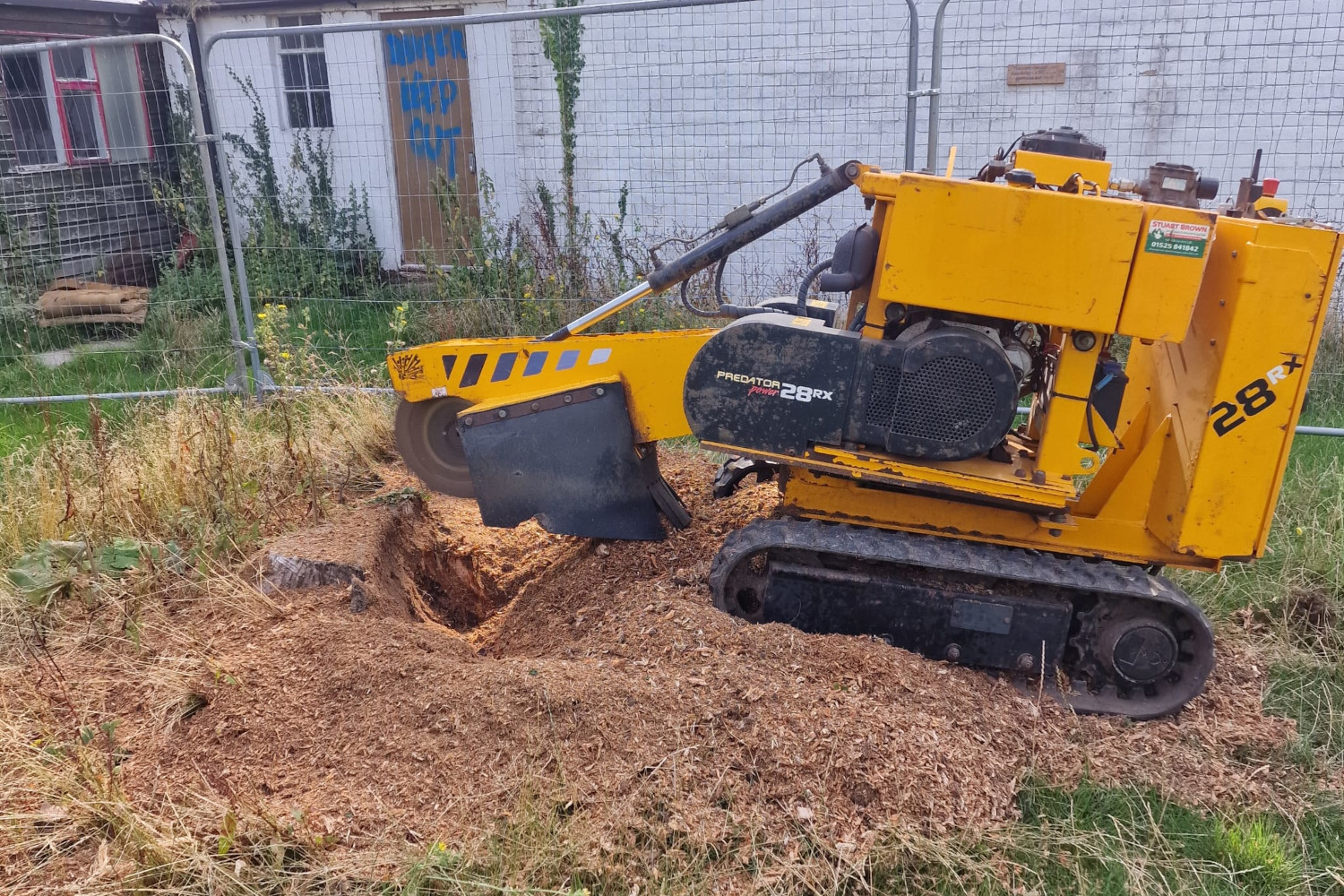
    A stump grinder uses a rotating cutting wheel to progressively grind the timber into smaller material. Rather than attempting to pull the entire stump and root system from the ground, the machine reduces the stump to below the surrounding surface. The resulting area can then usually be backfilled and incorporated more easily into the garden or landscape.

    Why Grind a Tree Stump?


    Tree stumps are sometimes left because they appear relatively harmless immediately after a tree has been removed. Over time, however, an unwanted stump can become inconvenient. It may interfere with mowing, occupy valuable planting space or create an obstacle in a lawn, pathway or landscaping project. Stump grinding can also improve the appearance of an area by removing the obvious remains of the old tree. For commercial properties, removing unwanted stumps can be particularly useful where they interfere with maintained grounds, pedestrian areas or future landscaping.

    Can You Grind an Old Tree Stump?


    Yes. Stump grinding does not have to take place immediately after tree removal. If you have inherited an old stump in your garden or have one remaining from a tree removed years ago, it may still be possible to grind it. Access to the stump and its position in relation to surrounding structures will need to be considered.

    Old stumps can vary considerably in condition depending on the species and how long they have been decaying. Evolution Tree Works can assess the stump and determine the most practical way of dealing with it.


    Does Stump Grinding Remove All the Roots?


    Stump grinding primarily deals with the main stump and immediate area beneath it. It does not normally involve excavating the entire root system from the surrounding ground. Most of the remaining roots can be left to break down naturally over time. This makes stump grinding considerably less disruptive than attempting to dig out every major root mechanically. If you have specific plans for the site, such as construction or substantial landscaping, let us know so the required outcome can be considered before the work begins.

    How Deep is a Stump Ground?


    The appropriate grinding depth depends on the location of the stump and what you intend to do with the area afterwards. For many garden situations, reducing the stump sufficiently below surrounding ground level allows the area to be covered and returned to general landscaping. Different requirements may apply where deeper excavation or construction is planned. It is therefore useful to explain your plans for the area when arranging the work.

    Can I Replant After Stump Grinding?


    Often, although planting another tree directly into exactly the same position is not always ideal. The old root system will remain within much of the surrounding soil, and the ground may contain woody material left from the previous tree. The reason the original tree was removed should also be considered before choosing a replacement. Our tree planting service in Langford can help you select an appropriate new tree and determine whether planting nearby would provide a better long-term result.

     
  • Style: Image
  • Image:
  • Extra Block Two (Left):

    Removing Trees From Small Gardens


    Restricted access does not necessarily prevent a tree from being removed. Many residential properties have trees in rear gardens accessible only through a side passage or other limited route. The tree itself can often be dismantled into manageable sections, while the feasibility of using larger machinery such as a stump grinder will depend on available access. Assessing the site beforehand allows the work and equipment to be planned around the property.

    orem ipsum dolor sit amet, consectetur adipiscing elit. Morbi viverra lobortis ligula, vitae scelerisque lorem ornare at. In fermentum tempus tortor in molestie. Morbi aliquam a mi ut porttitor.

    Tree Removal for Garden Redesign


    Tree removal is sometimes part of a larger change to a garden rather than a response to a dangerous tree. A tree may dominate a small garden, conflict with a planned extension or prevent a new landscaping scheme from working effectively. Before removing a healthy mature tree, it can be worth considering whether reduction or another form of management could achieve the desired result. Where removal is the chosen option, stump grinding can help prepare the area for its next use.

    Clearing the Site After Tree Removal


    Tree removal produces branches, foliage and substantial quantities of timber. These materials need to be processed and cleared as part of the work. Branches can be chipped, while larger sections of timber can be cut into manageable pieces and dealt with appropriately. Evolution Tree Works aims to leave the working area tidy once the agreed tree and stump work has been completed. Suitable timber can also continue to have a useful life after tree surgery rather than simply being treated as waste.


    Commercial Tree Removal in Langford


    Evolution Tree Works provides commercial tree removal and stump grinding in Langford for businesses, landlords and property managers. Trees on commercial sites may need to be removed because of structural concerns, planned development, landscaping changes or conflicts with buildings and access.


    Commercial removals can involve additional considerations such as:


    • Car parks
    • Vehicle access
    • Pedestrian routes
    • Nearby buildings
    • Public areas
    • Site operating hours
    • Multiple trees requiring work
     

    Careful planning can help minimise unnecessary disruption while the work is carried out.


    Tree Removal or Tree Reduction?


    If your main concern is simply that a tree has become too large, removal may not be necessary. A healthy tree can sometimes be managed through crown reduction, crown lifting or selective pruning. Tree removal becomes more appropriate where the tree is seriously compromised, unsuitable for the location or where there is no practical way of managing the conflict through pruning. Evolution Tree Works can assess the tree and discuss the available options rather than assuming removal is automatically required.

    Professional Tree Surgeons in Langford


    Tree removal can involve large weights, restricted working spaces and trees positioned close to valuable property. Professional planning and appropriate equipment allow the work to be carried out in a controlled manner. Evolution Tree Works provides tree removal and stump grinding in Langford, Bedfordshire for domestic and commercial customers. From a single unwanted garden tree to the sectional dismantling of a large tree in a restricted location, we can assess the site and recommend a practical approach.

     
  • Style: White
  • Extra Block Three (Left):

    Areas We Cover Around Langford


    Our hedge trimming services are available throughout:


    Need a Stump Removed in Langford?


    For any stump grinding or tree removal requirements, contact Evolution Tree Works on 01462 637 357 or use the link below to get in touch.


    Get in Touch

  • Extra Block Three (Right):
  • Style: Image
  • Image:


Stump Grinding & Tree Removal in Langford


Trees can be enormously valuable features of a garden or landscape, and where practical, appropriate pruning and management can often allow mature trees to be retained. Sometimes, however, removal is the most appropriate option. A tree may be dead, structurally compromised, badly storm damaged or simply unsuitable for the space in which it is growing. In other cases, a tree may need to be removed as part of landscaping, development or a wider change to the property.


Evolution Tree Works provides professional tree removal in Langford, Bedfordshire, including controlled tree dismantling and stump grinding for domestic and commercial properties. Our experienced tree surgeons can assess the tree, its surroundings and available access before determining an appropriate method of removal.

Stump Removal


When Does a Tree Need to Be Removed?


There is no single reason why a tree may need to be felled.

Common reasons for tree removal include:


  • The tree has died
  • Significant structural failure
  • Severe storm damage
  • Advanced decay
  • Serious root instability
  • The tree has become unsuitable for its location
  • The tree is obstructing planned landscaping or development
  • A damaged tree cannot reasonably be retained
  • The tree has outgrown the available space


Where a healthy tree has simply become too large, tree reduction in Langford may provide an alternative to complete removal. Where structural concerns exist, a tree survey can help determine whether pruning, monitoring, cable bracing or removal is the most appropriate course of action.


Safe Tree Felling in Langford


Where there is sufficient open space around a tree, it may be possible to fell it from ground level in a controlled direction. Before any felling takes place, the surrounding area needs to be considered carefully. Buildings, fences, roads, neighbouring properties, overhead obstacles and other trees can all influence how the work should be carried out.


The size, weight and natural lean of the tree must also be considered. Professional planning is particularly important because even a relatively modest tree can contain a substantial weight of timber.


Get in Touch


Sectional Tree Dismantling


Many trees in residential gardens cannot simply be felled in one piece. There may be houses, conservatories, sheds, greenhouses, fences or neighbouring gardens immediately beneath or beside the tree. In these situations, the tree can often be dismantled in sections.


The tree surgeon works progressively through the crown, removing manageable branches and sections of timber until the main stem can be safely reduced. Where branches cannot simply be allowed to fall, appropriate rigging techniques can be used to control and lower sections of the tree. This makes it possible to remove substantial trees from surprisingly restricted locations.

Removing Dead Trees


Dead trees can become increasingly unpredictable as their timber deteriorates. Branches may become brittle, structural strength can decline and decay may affect the trunk or root system. This can also make removing a dead tree more technically challenging than working on a healthy tree. The condition of the tree therefore needs to be assessed before deciding how it can safely be dismantled or felled.


Where a dead tree is positioned close to buildings, roads, paths or other frequently used areas, delaying necessary work may allow its condition to deteriorate further.

Removing Dangerous Trees


A tree does not necessarily need to be dead to become dangerous. Major cracks, root movement, extensive decay or structural failure can make retention increasingly difficult. Following severe weather, trees may also become partially uprooted or suffer major branch and stem failures. Where there is an immediate concern, our emergency tree services in Langford can assess storm-damaged, fallen or dangerously unstable trees. Not every defective tree requires removal. Where practical, pruning, reduction or structural support may offer alternatives. Where the remaining structure cannot reasonably be retained, controlled removal may be the safest long-term solution.


What Happens After a Tree Is Removed?


Felling or dismantling removes the visible part of a tree, but the stump and root system remain in the ground. For some locations, leaving the stump may not create a problem.


Elsewhere, it can become inconvenient, particularly if you want to:


  • Return the area to lawn
  • Create a flower bed
  • Install new landscaping
  • Improve access through the garden
  • Remove a trip hazard
  • Plant in the surrounding area
  • Avoid mowing around an old stump


In these situations, stump grinding provides an effective way of dealing with the remaining stump.
Stump Grinding


Stump Grinding in Langford


Evolution Tree Works provides professional stump grinding in Langford following tree removal or for older stumps left from trees removed previously.

A stump grinder uses a rotating cutting wheel to progressively grind the timber into smaller material. Rather than attempting to pull the entire stump and root system from the ground, the machine reduces the stump to below the surrounding surface. The resulting area can then usually be backfilled and incorporated more easily into the garden or landscape.

Why Grind a Tree Stump?


Tree stumps are sometimes left because they appear relatively harmless immediately after a tree has been removed. Over time, however, an unwanted stump can become inconvenient. It may interfere with mowing, occupy valuable planting space or create an obstacle in a lawn, pathway or landscaping project. Stump grinding can also improve the appearance of an area by removing the obvious remains of the old tree. For commercial properties, removing unwanted stumps can be particularly useful where they interfere with maintained grounds, pedestrian areas or future landscaping.

Can You Grind an Old Tree Stump?


Yes. Stump grinding does not have to take place immediately after tree removal. If you have inherited an old stump in your garden or have one remaining from a tree removed years ago, it may still be possible to grind it. Access to the stump and its position in relation to surrounding structures will need to be considered.

Old stumps can vary considerably in condition depending on the species and how long they have been decaying. Evolution Tree Works can assess the stump and determine the most practical way of dealing with it.


Does Stump Grinding Remove All the Roots?


Stump grinding primarily deals with the main stump and immediate area beneath it. It does not normally involve excavating the entire root system from the surrounding ground. Most of the remaining roots can be left to break down naturally over time. This makes stump grinding considerably less disruptive than attempting to dig out every major root mechanically. If you have specific plans for the site, such as construction or substantial landscaping, let us know so the required outcome can be considered before the work begins.

How Deep is a Stump Ground?


The appropriate grinding depth depends on the location of the stump and what you intend to do with the area afterwards. For many garden situations, reducing the stump sufficiently below surrounding ground level allows the area to be covered and returned to general landscaping. Different requirements may apply where deeper excavation or construction is planned. It is therefore useful to explain your plans for the area when arranging the work.

Can I Replant After Stump Grinding?


Often, although planting another tree directly into exactly the same position is not always ideal. The old root system will remain within much of the surrounding soil, and the ground may contain woody material left from the previous tree. The reason the original tree was removed should also be considered before choosing a replacement. Our tree planting service in Langford can help you select an appropriate new tree and determine whether planting nearby would provide a better long-term result.


Removing Trees From Small Gardens


Restricted access does not necessarily prevent a tree from being removed. Many residential properties have trees in rear gardens accessible only through a side passage or other limited route. The tree itself can often be dismantled into manageable sections, while the feasibility of using larger machinery such as a stump grinder will depend on available access. Assessing the site beforehand allows the work and equipment to be planned around the property.

orem ipsum dolor sit amet, consectetur adipiscing elit. Morbi viverra lobortis ligula, vitae scelerisque lorem ornare at. In fermentum tempus tortor in molestie. Morbi aliquam a mi ut porttitor.

Tree Removal for Garden Redesign


Tree removal is sometimes part of a larger change to a garden rather than a response to a dangerous tree. A tree may dominate a small garden, conflict with a planned extension or prevent a new landscaping scheme from working effectively. Before removing a healthy mature tree, it can be worth considering whether reduction or another form of management could achieve the desired result. Where removal is the chosen option, stump grinding can help prepare the area for its next use.

Clearing the Site After Tree Removal


Tree removal produces branches, foliage and substantial quantities of timber. These materials need to be processed and cleared as part of the work. Branches can be chipped, while larger sections of timber can be cut into manageable pieces and dealt with appropriately. Evolution Tree Works aims to leave the working area tidy once the agreed tree and stump work has been completed. Suitable timber can also continue to have a useful life after tree surgery rather than simply being treated as waste.


Commercial Tree Removal in Langford


Evolution Tree Works provides commercial tree removal and stump grinding in Langford for businesses, landlords and property managers. Trees on commercial sites may need to be removed because of structural concerns, planned development, landscaping changes or conflicts with buildings and access.


Commercial removals can involve additional considerations such as:


  • Car parks
  • Vehicle access
  • Pedestrian routes
  • Nearby buildings
  • Public areas
  • Site operating hours
  • Multiple trees requiring work
 

Careful planning can help minimise unnecessary disruption while the work is carried out.


Tree Removal or Tree Reduction?


If your main concern is simply that a tree has become too large, removal may not be necessary. A healthy tree can sometimes be managed through crown reduction, crown lifting or selective pruning. Tree removal becomes more appropriate where the tree is seriously compromised, unsuitable for the location or where there is no practical way of managing the conflict through pruning. Evolution Tree Works can assess the tree and discuss the available options rather than assuming removal is automatically required.

Professional Tree Surgeons in Langford


Tree removal can involve large weights, restricted working spaces and trees positioned close to valuable property. Professional planning and appropriate equipment allow the work to be carried out in a controlled manner. Evolution Tree Works provides tree removal and stump grinding in Langford, Bedfordshire for domestic and commercial customers. From a single unwanted garden tree to the sectional dismantling of a large tree in a restricted location, we can assess the site and recommend a practical approach.


Areas We Cover Around Langford


Our hedge trimming services are available throughout:


Need a Stump Removed in Langford?


For any stump grinding or tree removal requirements, contact Evolution Tree Works on 01462 637 357 or use the link below to get in touch.


Get in Touch


Frequently Asked Questions


No. A stump can sometimes be left in place if it does not create a problem. Stump grinding is useful where you want to return the area to lawn, improve access, landscape the space or simply remove the visible remains of the tree.

Usually, yes. Where there is insufficient room to fell the tree in one piece, it can often be dismantled progressively in smaller sections. Access and surrounding buildings will determine the precise method used.

No. Stump grinding normally removes the main stump to below ground level while much of the wider root system remains in the soil and gradually decomposes naturally.

Yes, in many cases. Old stumps can still be ground provided suitable access is available. The size, species, condition and location of the stump will affect how the work is carried out.

Often, although planting directly in exactly the same position may not be the best option because the old root system remains in the soil. We can advise on a suitable location and species if you would like to replace the removed tree.

Yes. Our commercial tree services are suitable for businesses, landlords, property managers and organisations responsible for trees and hedges across larger sites.