
• Extra Block One (Left):

    Dangerous & Unstable Trees


    Not every dangerous tree has been damaged by a storm. Decay, disease, root damage, previous poor pruning and structural weaknesses can all contribute to tree instability. Trees are also living structures and their condition can change over time. Warning signs that may justify professional assessment include large dead branches, significant cracks, cavities, movement around the roots, an increasing lean or major branches beginning to separate at weak unions.


    The presence of one of these features does not automatically mean the tree needs to be removed. An appropriate inspection can determine the significance of the defect and whether pruning, support, monitoring or removal represents the most suitable response.


    Fallen Trees & Branches


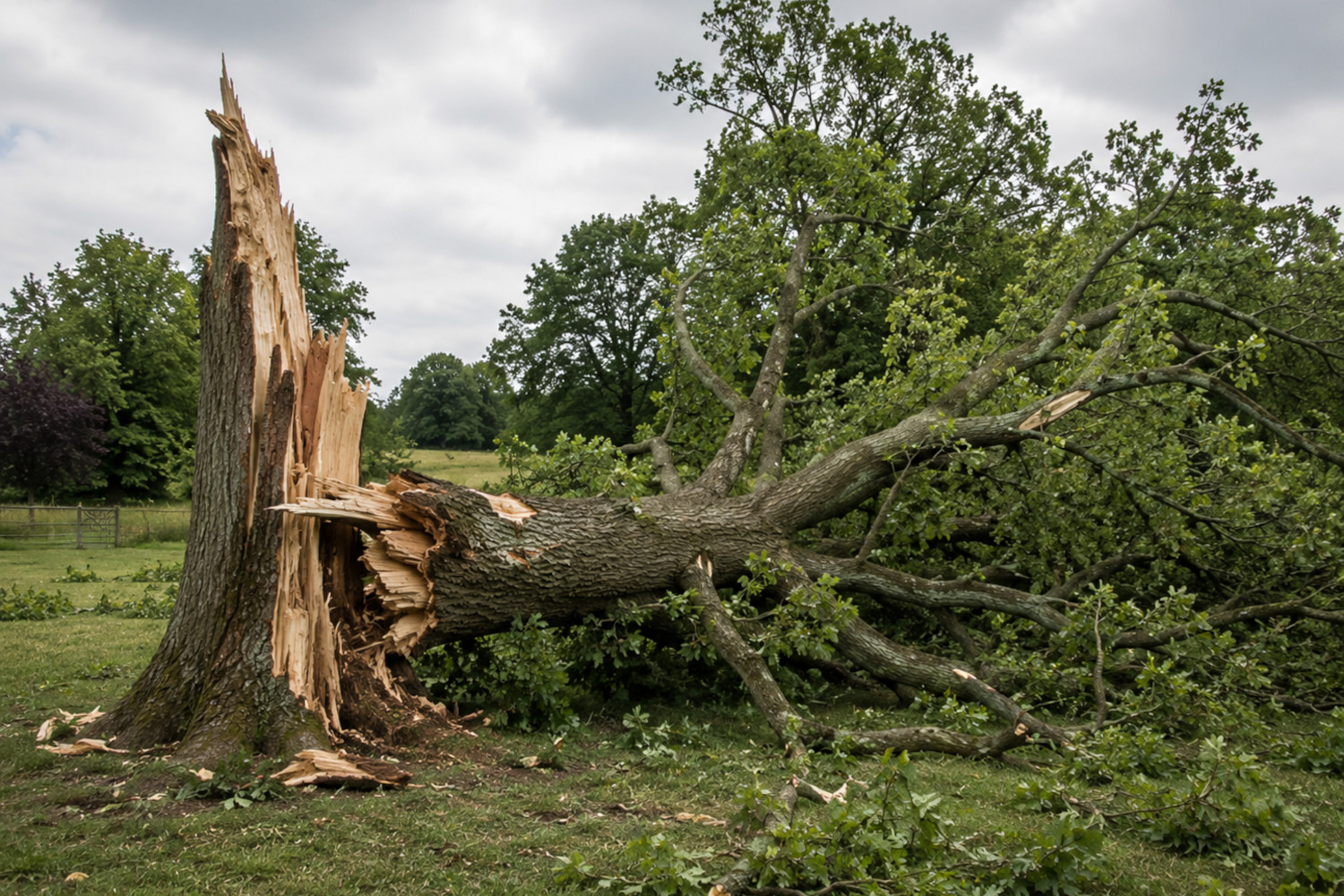
    A fallen tree can create significant disruption even when nobody has been injured and no building has been damaged.


    Trees and large branches may block:


    • Driveways
    • Garden access
    • Roads
    • Footpaths
    • Car parks
    • Entrances to commercial premises


    They may also fall across fences, sheds, garages and neighbouring properties.


    Our emergency tree surgeons in Langford can assess fallen trees and branches and determine how they can be safely cut, dismantled and cleared.

    Particular care may be necessary where fallen timber remains under tension or is supported by other branches, trees or structures.


    Hanging & Broken Branches


    A branch does not need to have reached the ground to create a hazard. Broken branches can sometimes remain suspended within the crown of a tree, caught on neighbouring limbs or hanging partially attached. These branches can be particularly difficult to predict because further wind or movement may cause them to fall.


    If you can see a large broken branch suspended above a garden, driveway, pavement or other frequently used area, avoid standing or walking beneath it and arrange for the tree to be assessed. Professional access and appropriate equipment allow damaged branches to be removed without relying on them remaining stable during the work.

  • Extra Block One (Right):

    Trees Damaged Close to Houses


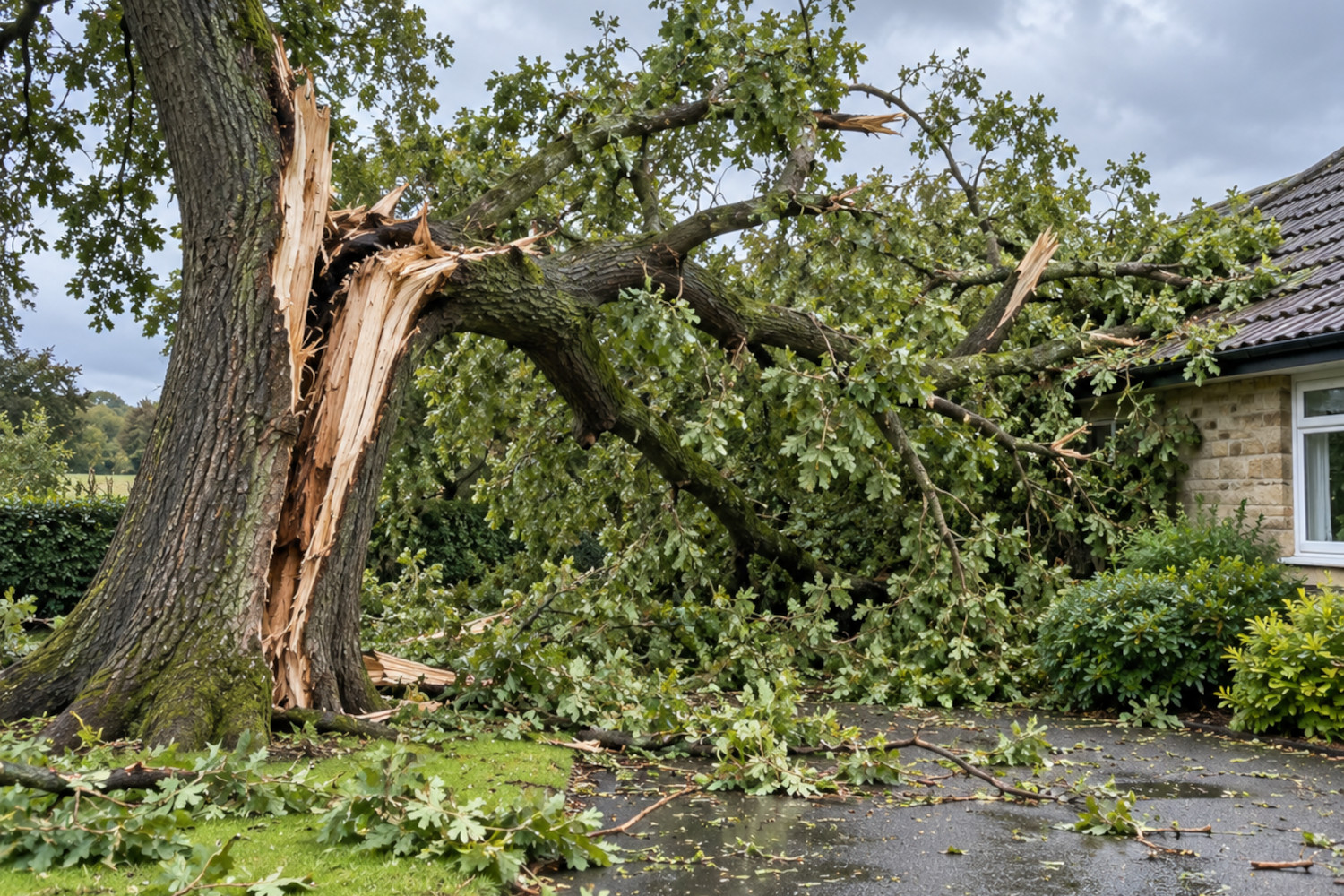
    Tree emergencies can become particularly challenging when damage occurs close to buildings. Branches may fall onto roofs, conservatories, garages or sheds, while unstable trees can lean towards houses and neighbouring properties. Simply cutting a damaged branch at ground level is not always possible because its weight may be supported unpredictably by the building or other sections of the tree.


    Our tree surgeons can assess the position of the damaged timber and plan how it can be removed in a controlled manner. Where appropriate, specialist rigging techniques can be used to manage individual sections and reduce the risk of further damage during the work.


    Newly Leaning Trees


    Many healthy trees naturally grow at an angle, and a longstanding lean is not necessarily a sign of instability. A new or rapidly increasing lean can be more concerning. If a previously upright tree changes position following a storm, particularly where the surrounding soil has lifted or cracked, this can indicate movement within the root system.


    Avoid approaching or standing beneath a tree that appears to be actively moving. A professional assessment can establish whether the tree can reasonably be retained or whether emergency removal is required.


    Split Trees & Weak Branch Unions


    Trees with multiple stems can sometimes develop weaknesses where those stems meet. Under severe loading, a weak union may begin to split, leaving substantial sections of the tree vulnerable to failure. The correct response depends on the extent of the damage.


    In some circumstances, selective pruning or tree cable bracing may provide an option for retaining a valuable tree. Where a major structural failure has already occurred, removal of the damaged stem or entire tree may be necessary. The condition of the individual tree should be assessed before deciding on the appropriate course of action.


    Can a Storm-Damaged Tree Be Saved?


    Yes, in some cases. Storm damage does not automatically mean a tree has to be felled. If the main structure and root system remain sound, it may be possible to remove damaged branches and retain the tree.


    Other trees may benefit from crown reduction, selective pruning or structural support. Where damage is severe, however, retaining the tree may create an unacceptable risk or leave a tree that is unlikely to recover successfully. Our aim is to assess what remains rather than simply remove a tree because part of it has failed.

  • Style: Image
  • Image:
  • Extra Block Two (Left):
     

    Tree Services


    Emergency Tree Assessment


    When dealing with a potentially dangerous tree, understanding what has happened is an important first step.


    An emergency assessment considers factors such as:


    • The nature of the damage
    • The size and position of damaged branches
    • Whether the trunk or major stems have split
    • Evidence of root movement
    • The direction in which the tree could fail
    • Nearby buildings and structures
    • Roads, paths and access routes
    • People and vehicles using the surrounding area


    This helps determine both the urgency of the situation and the safest method of dealing with it.


    What Should I Do if a Tree Looks Dangerous?


    If you believe a tree or large branch may be in immediate danger of falling, keep people and pets away from the area. 


    Do not attempt to pull down suspended branches or cut a tree that has partially fallen unless you have the appropriate training and equipment.

    Fallen and storm-damaged trees can contain substantial stored forces. Cutting a branch or trunk can suddenly release that tension and cause sections of timber to move unexpectedly.


    Where a tree has fallen onto or close to electrical equipment or overhead power lines, keep well away and contact the appropriate electricity network operator. Once the immediate area is secure, contact a professional tree surgeon for advice.


    Preventing Future Tree Emergencies


    It is impossible to prevent every tree failure, particularly during exceptional weather, but regular inspection and maintenance can identify some potential problems before they become emergencies. Large dead branches can often be removed during planned maintenance rather than waiting for them to fall.


    Developing structural weaknesses may also be identified through a tree survey or tree risk assessment, providing an opportunity to consider pruning, bracing or monitoring. This can be particularly valuable for mature trees positioned close to houses, roads, parking areas and other frequently occupied locations.

    Emergency Tree Work for Businesses


    Evolution Tree Works also provides emergency tree services for commercial properties in Langford. A fallen tree at a business premises can obstruct entrances, block parking areas or prevent vehicles and pedestrians moving safely around the site. Where possible, emergency work can focus first on removing the immediate hazard and restoring essential access.


    Further tree work or clearance can then be planned once the site has been made safe. Businesses, landlords and property managers responsible for multiple trees may also benefit from regular inspections and planned maintenance through our commercial tree services.

    After Emergency Tree Removal


    Once a dangerous tree has been removed, a stump and root system will normally remain in the ground. Depending on the location and your plans for the area, the stump can sometimes simply be left to decay naturally. Where it creates an obstruction or you want to return the area to lawn or landscaping, stump grinding in Langford can reduce the remaining stump below the surrounding ground level.


    You may also wish to consider planting a replacement tree. Choosing a species appropriate for the available space provides an opportunity to restore the garden while avoiding some of the problems that may have affected the previous tree.


    Professional Emergency Tree Services in Langford


    Tree emergencies require careful assessment because damaged trees can behave unpredictably. Evolution Tree Works provides professional emergency tree services in Langford, Bedfordshire, dealing with fallen trees, broken branches, storm damage and unstable trees for domestic and commercial customers.


    Where a tree can reasonably be retained, we can consider appropriate remedial work. Where the damage makes safe retention impractical, we can dismantle or remove the tree and advise on stump grinding and replacement planting if required.

     
  • Style: Lime
  • Extra Block Three (Left):

    Areas We Cover Around Langford


    Our hedge trimming services are available throughout:


    Need Urgent Tree Removal in Langford?


    Whether a tree has fallen completely, a large branch is hanging dangerously or you are concerned that a damaged tree could fail, contact Evolution Tree Works on 01462 637 357 or use the link below to get in touch.


    Get in Touch

  • Extra Block Three (Right):
  • Style: Image
  • Image:

Emergency Tree Surgeons in Langford, Bedfordshire


Fallen trees, storm-damaged branches and suddenly unstable trees can create an immediate danger to people, buildings, vehicles and surrounding property. Evolution Tree Works provides professional emergency tree services in Langford, Bedfordshire, assessing dangerous and damaged trees and carrying out the work necessary to make the area safe.


Tree emergencies can develop following strong winds, heavy rain or the unexpected failure of a branch or stem. In other cases, an existing weakness within a tree may deteriorate until urgent attention is required.


Whether a tree has fallen completely, a large branch is hanging dangerously or you are concerned that a damaged tree could fail, our experienced tree surgeons can assess the situation and recommend an appropriate response.
Emergency Tree Removal


Storm-Damaged Trees


High winds place enormous forces on tree crowns, branches and root systems. A storm can cause obvious damage such as snapped limbs and fallen trees, but it can also create structural problems that are less immediately apparent.


Storm damage can include:


  • Broken or hanging branches
  • Split stems
  • Cracked branch unions
  • Partially uprooted trees
  • Newly leaning trees
  • Damaged root systems
  • Branches resting on buildings
  • Trees or limbs obstructing roads and driveways
  • Unstable sections remaining within the crown


If you notice significant changes to a tree following severe weather, professional assessment can help establish whether urgent work is necessary.

Emergency Tree Removal in Langford


Some damaged trees can be made safe through the removal of individual branches or compromised sections of the crown. Others may have suffered such extensive damage that retaining the tree is no longer practical. Evolution Tree Works provides emergency tree removal in Langford where a tree presents an unacceptable immediate risk and needs to be dismantled or felled.


The appropriate method will depend on the location of the tree and the surrounding obstacles. Where sufficient space is available, conventional felling may be possible. In gardens and built-up areas, the tree may instead need to be dismantled progressively, allowing branches and sections of trunk to be carefully controlled as they are removed.


Get in Touch


Dangerous & Unstable Trees


Not every dangerous tree has been damaged by a storm. Decay, disease, root damage, previous poor pruning and structural weaknesses can all contribute to tree instability. Trees are also living structures and their condition can change over time. Warning signs that may justify professional assessment include large dead branches, significant cracks, cavities, movement around the roots, an increasing lean or major branches beginning to separate at weak unions.


The presence of one of these features does not automatically mean the tree needs to be removed. An appropriate inspection can determine the significance of the defect and whether pruning, support, monitoring or removal represents the most suitable response.


Fallen Trees & Branches


A fallen tree can create significant disruption even when nobody has been injured and no building has been damaged.


Trees and large branches may block:


  • Driveways
  • Garden access
  • Roads
  • Footpaths
  • Car parks
  • Entrances to commercial premises


They may also fall across fences, sheds, garages and neighbouring properties.


Our emergency tree surgeons in Langford can assess fallen trees and branches and determine how they can be safely cut, dismantled and cleared.

Particular care may be necessary where fallen timber remains under tension or is supported by other branches, trees or structures.


Hanging & Broken Branches


A branch does not need to have reached the ground to create a hazard. Broken branches can sometimes remain suspended within the crown of a tree, caught on neighbouring limbs or hanging partially attached. These branches can be particularly difficult to predict because further wind or movement may cause them to fall.


If you can see a large broken branch suspended above a garden, driveway, pavement or other frequently used area, avoid standing or walking beneath it and arrange for the tree to be assessed. Professional access and appropriate equipment allow damaged branches to be removed without relying on them remaining stable during the work.

Trees Damaged Close to Houses


Tree emergencies can become particularly challenging when damage occurs close to buildings. Branches may fall onto roofs, conservatories, garages or sheds, while unstable trees can lean towards houses and neighbouring properties. Simply cutting a damaged branch at ground level is not always possible because its weight may be supported unpredictably by the building or other sections of the tree.


Our tree surgeons can assess the position of the damaged timber and plan how it can be removed in a controlled manner. Where appropriate, specialist rigging techniques can be used to manage individual sections and reduce the risk of further damage during the work.


Newly Leaning Trees


Many healthy trees naturally grow at an angle, and a longstanding lean is not necessarily a sign of instability. A new or rapidly increasing lean can be more concerning. If a previously upright tree changes position following a storm, particularly where the surrounding soil has lifted or cracked, this can indicate movement within the root system.


Avoid approaching or standing beneath a tree that appears to be actively moving. A professional assessment can establish whether the tree can reasonably be retained or whether emergency removal is required.


Split Trees & Weak Branch Unions


Trees with multiple stems can sometimes develop weaknesses where those stems meet. Under severe loading, a weak union may begin to split, leaving substantial sections of the tree vulnerable to failure. The correct response depends on the extent of the damage.


In some circumstances, selective pruning or tree cable bracing may provide an option for retaining a valuable tree. Where a major structural failure has already occurred, removal of the damaged stem or entire tree may be necessary. The condition of the individual tree should be assessed before deciding on the appropriate course of action.


Can a Storm-Damaged Tree Be Saved?


Yes, in some cases. Storm damage does not automatically mean a tree has to be felled. If the main structure and root system remain sound, it may be possible to remove damaged branches and retain the tree.


Other trees may benefit from crown reduction, selective pruning or structural support. Where damage is severe, however, retaining the tree may create an unacceptable risk or leave a tree that is unlikely to recover successfully. Our aim is to assess what remains rather than simply remove a tree because part of it has failed.


Tree Services


Emergency Tree Assessment


When dealing with a potentially dangerous tree, understanding what has happened is an important first step.


An emergency assessment considers factors such as:


  • The nature of the damage
  • The size and position of damaged branches
  • Whether the trunk or major stems have split
  • Evidence of root movement
  • The direction in which the tree could fail
  • Nearby buildings and structures
  • Roads, paths and access routes
  • People and vehicles using the surrounding area


This helps determine both the urgency of the situation and the safest method of dealing with it.


What Should I Do if a Tree Looks Dangerous?


If you believe a tree or large branch may be in immediate danger of falling, keep people and pets away from the area. 


Do not attempt to pull down suspended branches or cut a tree that has partially fallen unless you have the appropriate training and equipment.

Fallen and storm-damaged trees can contain substantial stored forces. Cutting a branch or trunk can suddenly release that tension and cause sections of timber to move unexpectedly.


Where a tree has fallen onto or close to electrical equipment or overhead power lines, keep well away and contact the appropriate electricity network operator. Once the immediate area is secure, contact a professional tree surgeon for advice.


Preventing Future Tree Emergencies


It is impossible to prevent every tree failure, particularly during exceptional weather, but regular inspection and maintenance can identify some potential problems before they become emergencies. Large dead branches can often be removed during planned maintenance rather than waiting for them to fall.


Developing structural weaknesses may also be identified through a tree survey or tree risk assessment, providing an opportunity to consider pruning, bracing or monitoring. This can be particularly valuable for mature trees positioned close to houses, roads, parking areas and other frequently occupied locations.

Emergency Tree Work for Businesses


Evolution Tree Works also provides emergency tree services for commercial properties in Langford. A fallen tree at a business premises can obstruct entrances, block parking areas or prevent vehicles and pedestrians moving safely around the site. Where possible, emergency work can focus first on removing the immediate hazard and restoring essential access.


Further tree work or clearance can then be planned once the site has been made safe. Businesses, landlords and property managers responsible for multiple trees may also benefit from regular inspections and planned maintenance through our commercial tree services.

After Emergency Tree Removal


Once a dangerous tree has been removed, a stump and root system will normally remain in the ground. Depending on the location and your plans for the area, the stump can sometimes simply be left to decay naturally. Where it creates an obstruction or you want to return the area to lawn or landscaping, stump grinding in Langford can reduce the remaining stump below the surrounding ground level.


You may also wish to consider planting a replacement tree. Choosing a species appropriate for the available space provides an opportunity to restore the garden while avoiding some of the problems that may have affected the previous tree.


Professional Emergency Tree Services in Langford


Tree emergencies require careful assessment because damaged trees can behave unpredictably. Evolution Tree Works provides professional emergency tree services in Langford, Bedfordshire, dealing with fallen trees, broken branches, storm damage and unstable trees for domestic and commercial customers.


Where a tree can reasonably be retained, we can consider appropriate remedial work. Where the damage makes safe retention impractical, we can dismantle or remove the tree and advise on stump grinding and replacement planting if required.


Areas We Cover Around Langford


Our hedge trimming services are available throughout:


Need Urgent Tree Removal in Langford?


Whether a tree has fallen completely, a large branch is hanging dangerously or you are concerned that a damaged tree could fail, contact Evolution Tree Works on 01462 637 357 or use the link below to get in touch.


Get in Touch


Frequently Asked Questions


A tree emergency generally involves a tree or branch presenting an immediate or developing danger to people, property or access. Examples include fallen trees, large hanging branches, storm-damaged trees, split stems and trees that have suddenly begun to lean.

No. Some storm-damaged trees can be retained by removing broken branches or carrying out appropriate pruning or structural work. The extent of the damage and condition of the remaining tree need to be assessed before deciding whether removal is necessary.

Keep people and vehicles away from the area beneath the branch and avoid attempting to pull it down yourself. Suspended branches can move or fall unexpectedly and should be assessed and removed using appropriate equipment.

Yes. Trees in restricted spaces can often be dismantled in sections rather than felled in one piece. The method used will depend on the tree, its condition and the buildings and other obstacles surrounding it.

Yes. If a tree has to be removed, stump grinding can be carried out to reduce the remaining stump below ground level where appropriate. This can make the area easier to landscape, return to lawn or prepare for new planting.