• Extra Block One (Left):

    Preserving Mature Trees


    Large mature trees can be irreplaceable features of a property or landscape. They may have taken many decades to develop and can provide shade, screening, wildlife habitat and considerable visual character. Where a mature tree develops a structural weakness, complete removal is not necessarily the only option. Depending on its condition, a combination of selective pruning, crown reduction, monitoring and cable bracing may allow the tree to be retained. The aim is to manage the particular weakness while preserving as much of the healthy tree as reasonably possible.


    Dynamic Tree Cable Bracing


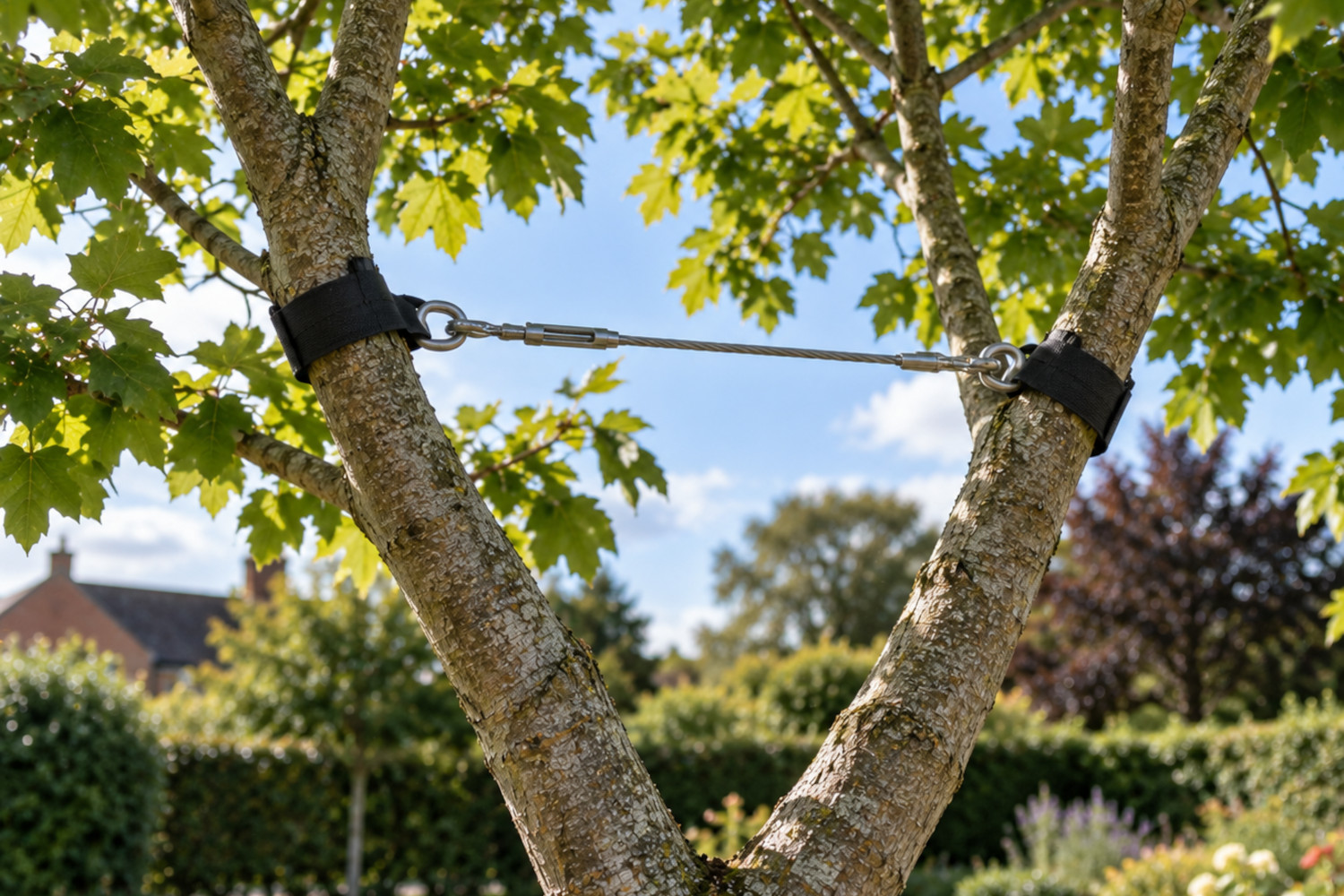
    A dynamic cable bracing system is designed to provide support while allowing the tree to retain a degree of natural movement. Rather than holding branches or stems completely rigid, the system can help limit excessive movement when the tree is exposed to stronger forces. Allowing controlled movement can be beneficial because trees naturally respond to movement by developing supporting growth. Dynamic systems can therefore be useful where additional support is desirable but completely restricting movement would be unnecessary. Whether dynamic bracing is appropriate depends on the individual tree and the nature of its structural weakness.


    Static Tree Cable Bracing


    A static cable bracing system provides firmer restraint. It may be considered where a particular defect requires more direct structural support and allowing substantial movement would be undesirable. Static systems and dynamic systems therefore serve different purposes. Choosing between them is not simply a matter of preference. The condition of the tree, position of the weakness and forces acting upon the affected stems or branches all need to be assessed. Evolution Tree Works can determine whether bracing is appropriate and what type of support should be considered.


    Dynamic vs Static Cable Bracing


    The simplest distinction between the two systems is the amount of movement they are intended to allow. Dynamic bracing provides support while retaining controlled natural movement. Static bracing provides stronger restraint where greater stabilisation is required. Neither approach is automatically better. A tree that benefits from dynamic support may not require rigid restraint, while a more significant structural weakness may need a different approach. The system should therefore be selected according to the needs of the individual tree.


  • Extra Block One (Right):

    Cable Bracing Bedfordshire 

    Co-Dominant Stems


    Some trees develop two or more major stems of similar size rather than a single dominant trunk. These are known as co-dominant stems. Many trees with this form remain stable, but particular unions can become structurally vulnerable as the stems increase in size. Where a weak union exists between substantial stems, the forces generated during strong winds can place considerable stress on the connection. A professional assessment can determine whether the structure requires intervention and whether cable bracing could form part of an appropriate management strategy.


    Supporting Heavy Branches


    Large lateral branches can become extremely heavy as they mature. Where the attachment of a significant branch raises concerns, reducing some of the load through selective pruning may sometimes be appropriate. In other circumstances, additional support may also be considered. Cable bracing can potentially reduce the extent of movement or provide supplementary support to a vulnerable branch. The surrounding area is important too. A heavy branch above an open part of a garden presents a different situation from one positioned over a building, parking area or regularly used path.


    Cable Bracing & Tree Reduction


    Cable bracing does not always need to be used in isolation. In some circumstances, tree reduction in Langford can complement a bracing system. Reducing the length or weight of particular branches can decrease the mechanical forces acting on a weak union, while bracing provides additional support. This combined approach may be preferable to either excessive pruning or relying entirely on the support system. Any reduction should remain appropriate to the species, age and condition of the tree.

  • Style: Image
  • Image:
  • Extra Block Two (Left):

    Can Cable Bracing Save a Damaged Tree?


    Sometimes, although it depends on the extent and nature of the damage. Cable bracing cannot restore decayed wood or turn a severely compromised tree back into a structurally sound one. What it can do is provide additional support where a tree has a manageable structural weakness and is otherwise considered suitable for retention.


    For some mature trees, this may help avoid unnecessary removal. Where deterioration is too advanced or the remaining structure cannot reasonably be managed, tree removal in Langford may ultimately be the more appropriate option.

    Cracked & Split Trees


    Cracks and splits can vary enormously in significance. A superficial crack may require little intervention, while a developing split between major stems could represent a much more substantial concern. The position and extent of the defect, movement within the tree and condition of the surrounding wood all need to be considered.


    Where a split has developed recently or appears to be increasing, professional assessment is advisable. Bracing may be one potential option, but only after determining whether the remaining structure is suitable for support.

    Cable Bracing Following Storm Damage


    High winds can expose existing weaknesses within mature trees. Branches may split, unions may begin to open and stems can experience forces considerably greater than those encountered during normal weather. After a storm, it is important not to assume that a damaged tree either needs immediate removal or can safely be left alone. A professional inspection can help establish the extent of the damage.


    Where the tree remains viable, pruning, bracing or ongoing monitoring may sometimes allow it to be retained. For trees presenting an immediate concern, Evolution Tree Works also provides emergency tree services in Langford.


    Cable Bracing for Commercial Properties


    Evolution Tree Works also provides tree cable bracing in Langford for commercial properties, landlords and property managers. Mature trees can be important features of business premises, communal grounds and managed landscapes.


    Where a valuable tree develops a structural weakness, retaining it may be preferable to removal if this can be achieved appropriately.

    Assessment is particularly important where trees stand close to:


    • Car parks
    • Pedestrian routes
    • Entrances
    • Access roads
    • Buildings
    • Communal areas


    Cable bracing can be considered alongside our wider commercial tree services in Langford, including surveys, pruning, reduction and planned tree management.

    Tree Surveys & Structural Assessments


    Before recommending cable bracing, it is important to understand why support may be required. Evolution Tree Works provides tree surveys and tree risk assessments in Langford to identify visible defects and structural concerns.


    An assessment can help establish whether the tree would benefit from:


    • Monitoring
    • Selective pruning
    • Crown reduction
    • Cable bracing
    • A combination of measures
    • Removal where retention is no longer practical


    This allows decisions to be based on the individual tree rather than assuming that every crack or weak union requires the same solution.


    Does Tree Bracing Need Maintenance?


    A braced tree should not simply be fitted with a support system and then forgotten. Trees continue to grow and change. Branches increase in diameter, crowns develop and the structural condition of the tree can alter over time. Bracing systems therefore need appropriate monitoring. Periodic inspection provides an opportunity to assess both the support system and the tree itself, checking whether circumstances have changed or additional management is required. This is particularly important for trees being retained because of a known structural weakness.

    How Long Does Tree Cable Bracing Last?


    There is no single lifespan that applies to every installation. The type of system, materials used, tree growth and surrounding conditions can all influence how the bracing should be managed. The tree itself may also change considerably during the life of the system. For this reason, cable bracing should be viewed as part of ongoing tree management rather than a permanent installation that never requires further consideration. Regular inspection can help determine whether the system remains appropriate.

    Managing Trees Rather Than Automatically Removing Them


    Tree surgery should not automatically mean tree removal. Many structural concerns can potentially be managed while retaining the tree. For a mature tree that contributes significantly to a garden or landscape, exploring appropriate management options can be worthwhile. Cable bracing is one of several techniques that may help achieve this. Where retention remains practical, the objective is to manage the identified weakness while preserving the benefits the tree provides.

     
  • Style: Lime
  • Extra Block Three (Left):

    Areas We Cover Around Langford


    Our hedge trimming services are available throughout:


    Need Cable Bracing services in Langford?


    If you are concerned about a weak branch union, split stem or structural problem within a mature tree, contact Evolution Tree Works on 01462 637 357 or use the link below to get in touch.


    Get in Touch

  • Extra Block Three (Right):
  • Style: Image
  • Image:
 

Professional Tree Cable Bracing in Langford, Bedfordshire


Mature trees can develop structural weaknesses without necessarily needing to be removed. Heavy branches, weak unions, multiple stems and previous damage can sometimes leave part of a tree more vulnerable to failure. Where the tree remains otherwise suitable for retention, cable bracing may provide additional support. 


Evolution Tree Works provides professional tree cable bracing services in Langford, Bedfordshire, helping support suitable mature and structurally vulnerable trees. Depending on the condition of the tree and the type of weakness involved, a dynamic or static bracing system may be considered.


Cable bracing is not appropriate for every damaged tree, but in the right circumstances it can form part of a wider management strategy designed to preserve a valuable tree rather than remove it unnecessarily.
Cable Bracing in Langford


What is Tree Cable Bracing?


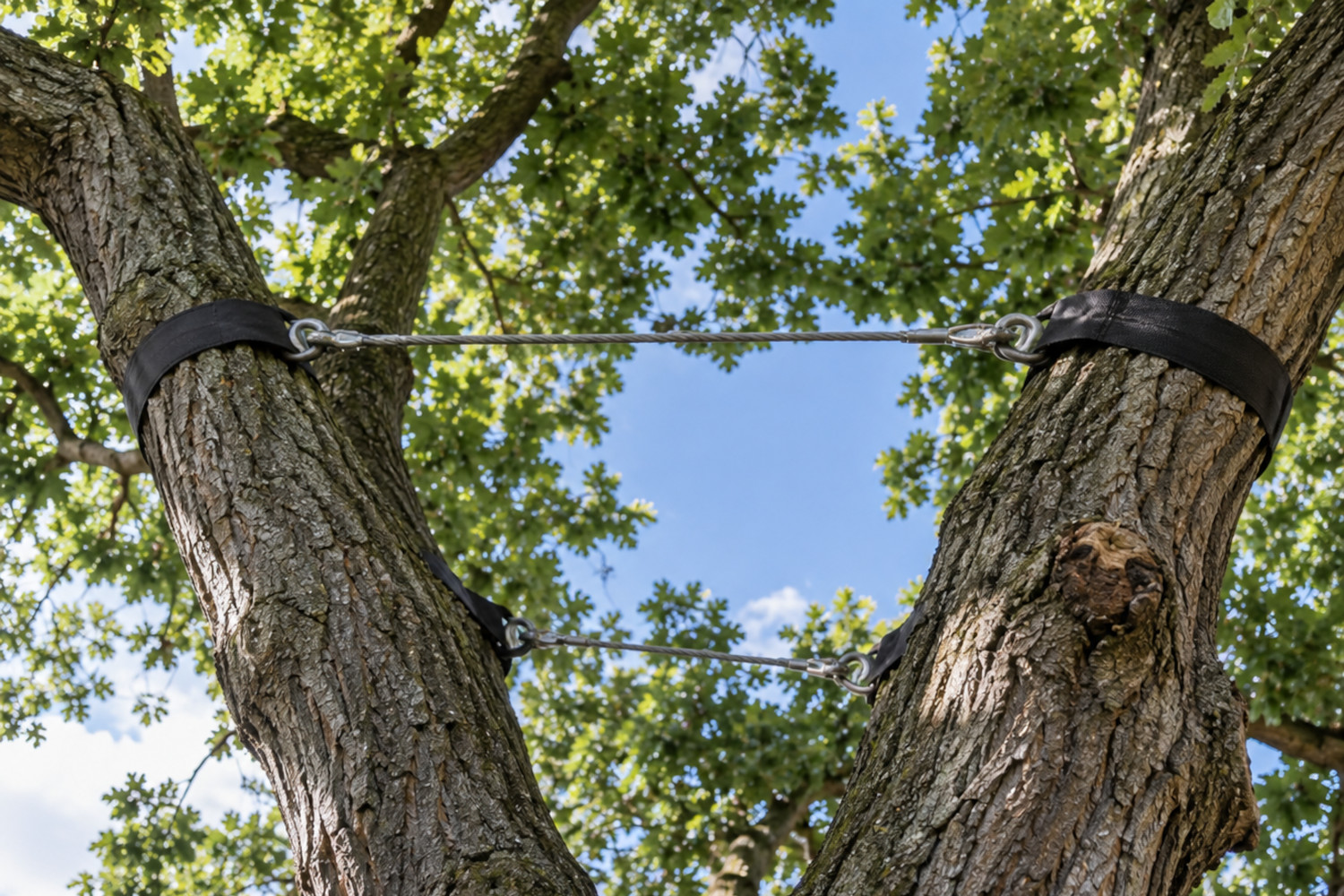
Tree cable bracing involves installing a support system between selected parts of a tree to help manage structural weakness. The system can provide additional support to branches or stems where there is concern about their ability to withstand the forces placed upon them. Trees naturally move in the wind, and this movement plays an important part in how they develop.


The objective of bracing is therefore not necessarily to make a tree completely rigid. The appropriate system depends on the nature of the defect and how much movement should be permitted. Professional assessment is important before deciding whether bracing is suitable and which type of system should be used.


Weak Branch Unions


Branches do not always develop equally strong attachments to the main structure of a tree. Certain branch arrangements can create weak unions, particularly as stems increase in size and weight. A visible weakness does not necessarily mean failure is imminent, but it may warrant assessment where a substantial branch could affect a house, driveway, path or other frequently occupied area. Depending on the circumstances, management could involve reducing the weight of the branch, installing additional support, monitoring the union or a combination of measures.

Why Might a Tree Need Cable Bracing?


There are several reasons why additional structural support might be considered.


These can include:


  • Weak branch unions
  • Co-dominant stems
  • Heavy lateral branches
  • Previous branch failure
  • Cracks or developing splits
  • Structural weakness within a mature tree
  • A valuable tree where retention is desirable
  • Branches positioned above buildings or frequently used areas


The presence of one of these features does not automatically mean that bracing is required. A tree risk assessment in Langford can help establish the significance of the defect and whether support, pruning, monitoring or another form of management is appropriate.


Get in Touch


Preserving Mature Trees


Large mature trees can be irreplaceable features of a property or landscape. They may have taken many decades to develop and can provide shade, screening, wildlife habitat and considerable visual character. Where a mature tree develops a structural weakness, complete removal is not necessarily the only option. Depending on its condition, a combination of selective pruning, crown reduction, monitoring and cable bracing may allow the tree to be retained. The aim is to manage the particular weakness while preserving as much of the healthy tree as reasonably possible.


Dynamic Tree Cable Bracing


A dynamic cable bracing system is designed to provide support while allowing the tree to retain a degree of natural movement. Rather than holding branches or stems completely rigid, the system can help limit excessive movement when the tree is exposed to stronger forces. Allowing controlled movement can be beneficial because trees naturally respond to movement by developing supporting growth. Dynamic systems can therefore be useful where additional support is desirable but completely restricting movement would be unnecessary. Whether dynamic bracing is appropriate depends on the individual tree and the nature of its structural weakness.


Static Tree Cable Bracing


A static cable bracing system provides firmer restraint. It may be considered where a particular defect requires more direct structural support and allowing substantial movement would be undesirable. Static systems and dynamic systems therefore serve different purposes. Choosing between them is not simply a matter of preference. The condition of the tree, position of the weakness and forces acting upon the affected stems or branches all need to be assessed. Evolution Tree Works can determine whether bracing is appropriate and what type of support should be considered.


Dynamic vs Static Cable Bracing


The simplest distinction between the two systems is the amount of movement they are intended to allow. Dynamic bracing provides support while retaining controlled natural movement. Static bracing provides stronger restraint where greater stabilisation is required. Neither approach is automatically better. A tree that benefits from dynamic support may not require rigid restraint, while a more significant structural weakness may need a different approach. The system should therefore be selected according to the needs of the individual tree.


Cable Bracing Bedfordshire 

Co-Dominant Stems


Some trees develop two or more major stems of similar size rather than a single dominant trunk. These are known as co-dominant stems. Many trees with this form remain stable, but particular unions can become structurally vulnerable as the stems increase in size. Where a weak union exists between substantial stems, the forces generated during strong winds can place considerable stress on the connection. A professional assessment can determine whether the structure requires intervention and whether cable bracing could form part of an appropriate management strategy.


Supporting Heavy Branches


Large lateral branches can become extremely heavy as they mature. Where the attachment of a significant branch raises concerns, reducing some of the load through selective pruning may sometimes be appropriate. In other circumstances, additional support may also be considered. Cable bracing can potentially reduce the extent of movement or provide supplementary support to a vulnerable branch. The surrounding area is important too. A heavy branch above an open part of a garden presents a different situation from one positioned over a building, parking area or regularly used path.


Cable Bracing & Tree Reduction


Cable bracing does not always need to be used in isolation. In some circumstances, tree reduction in Langford can complement a bracing system. Reducing the length or weight of particular branches can decrease the mechanical forces acting on a weak union, while bracing provides additional support. This combined approach may be preferable to either excessive pruning or relying entirely on the support system. Any reduction should remain appropriate to the species, age and condition of the tree.

Can Cable Bracing Save a Damaged Tree?


Sometimes, although it depends on the extent and nature of the damage. Cable bracing cannot restore decayed wood or turn a severely compromised tree back into a structurally sound one. What it can do is provide additional support where a tree has a manageable structural weakness and is otherwise considered suitable for retention.


For some mature trees, this may help avoid unnecessary removal. Where deterioration is too advanced or the remaining structure cannot reasonably be managed, tree removal in Langford may ultimately be the more appropriate option.

Cracked & Split Trees


Cracks and splits can vary enormously in significance. A superficial crack may require little intervention, while a developing split between major stems could represent a much more substantial concern. The position and extent of the defect, movement within the tree and condition of the surrounding wood all need to be considered.


Where a split has developed recently or appears to be increasing, professional assessment is advisable. Bracing may be one potential option, but only after determining whether the remaining structure is suitable for support.

Cable Bracing Following Storm Damage


High winds can expose existing weaknesses within mature trees. Branches may split, unions may begin to open and stems can experience forces considerably greater than those encountered during normal weather. After a storm, it is important not to assume that a damaged tree either needs immediate removal or can safely be left alone. A professional inspection can help establish the extent of the damage.


Where the tree remains viable, pruning, bracing or ongoing monitoring may sometimes allow it to be retained. For trees presenting an immediate concern, Evolution Tree Works also provides emergency tree services in Langford.


Cable Bracing for Commercial Properties


Evolution Tree Works also provides tree cable bracing in Langford for commercial properties, landlords and property managers. Mature trees can be important features of business premises, communal grounds and managed landscapes.


Where a valuable tree develops a structural weakness, retaining it may be preferable to removal if this can be achieved appropriately.

Assessment is particularly important where trees stand close to:


  • Car parks
  • Pedestrian routes
  • Entrances
  • Access roads
  • Buildings
  • Communal areas


Cable bracing can be considered alongside our wider commercial tree services in Langford, including surveys, pruning, reduction and planned tree management.

Tree Surveys & Structural Assessments


Before recommending cable bracing, it is important to understand why support may be required. Evolution Tree Works provides tree surveys and tree risk assessments in Langford to identify visible defects and structural concerns.


An assessment can help establish whether the tree would benefit from:


  • Monitoring
  • Selective pruning
  • Crown reduction
  • Cable bracing
  • A combination of measures
  • Removal where retention is no longer practical


This allows decisions to be based on the individual tree rather than assuming that every crack or weak union requires the same solution.


Does Tree Bracing Need Maintenance?


A braced tree should not simply be fitted with a support system and then forgotten. Trees continue to grow and change. Branches increase in diameter, crowns develop and the structural condition of the tree can alter over time. Bracing systems therefore need appropriate monitoring. Periodic inspection provides an opportunity to assess both the support system and the tree itself, checking whether circumstances have changed or additional management is required. This is particularly important for trees being retained because of a known structural weakness.

How Long Does Tree Cable Bracing Last?


There is no single lifespan that applies to every installation. The type of system, materials used, tree growth and surrounding conditions can all influence how the bracing should be managed. The tree itself may also change considerably during the life of the system. For this reason, cable bracing should be viewed as part of ongoing tree management rather than a permanent installation that never requires further consideration. Regular inspection can help determine whether the system remains appropriate.

Managing Trees Rather Than Automatically Removing Them


Tree surgery should not automatically mean tree removal. Many structural concerns can potentially be managed while retaining the tree. For a mature tree that contributes significantly to a garden or landscape, exploring appropriate management options can be worthwhile. Cable bracing is one of several techniques that may help achieve this. Where retention remains practical, the objective is to manage the identified weakness while preserving the benefits the tree provides.


Areas We Cover Around Langford


Our hedge trimming services are available throughout:


Need Cable Bracing services in Langford?


If you are concerned about a weak branch union, split stem or structural problem within a mature tree, contact Evolution Tree Works on 01462 637 357 or use the link below to get in touch.


Get in Touch


Frequently Asked Questions


Tree cable bracing uses a support system between selected branches or stems to help manage structural weakness. Depending on the system, it can provide additional support while either allowing controlled movement or providing firmer restraint.

Dynamic bracing is designed to support a tree while allowing a degree of natural movement. Static bracing provides greater restraint where stronger stabilisation is required. The appropriate system depends on the individual tree and structural problem.

In some circumstances, yes. Where a mature tree has a manageable structural weakness but is otherwise suitable for retention, bracing may form part of a strategy that allows the tree to remain. It cannot, however, make every badly damaged or decayed tree safe.

Yes. Selective pruning or crown reduction may reduce the weight and forces acting on a weak branch or union, while cable bracing provides additional support. A combined approach can be appropriate for some trees.

Yes. Both the tree and its support system should be monitored because trees continue to grow and their condition can change. Periodic inspection helps determine whether the bracing remains appropriate and whether further tree work is required.